
 ページID検索とは
ページの先頭です。
メニューを飛ばして本文へ
 <外部リンク>

 <外部リンク>
 <外部リンク>
 <外部リンク>
本文
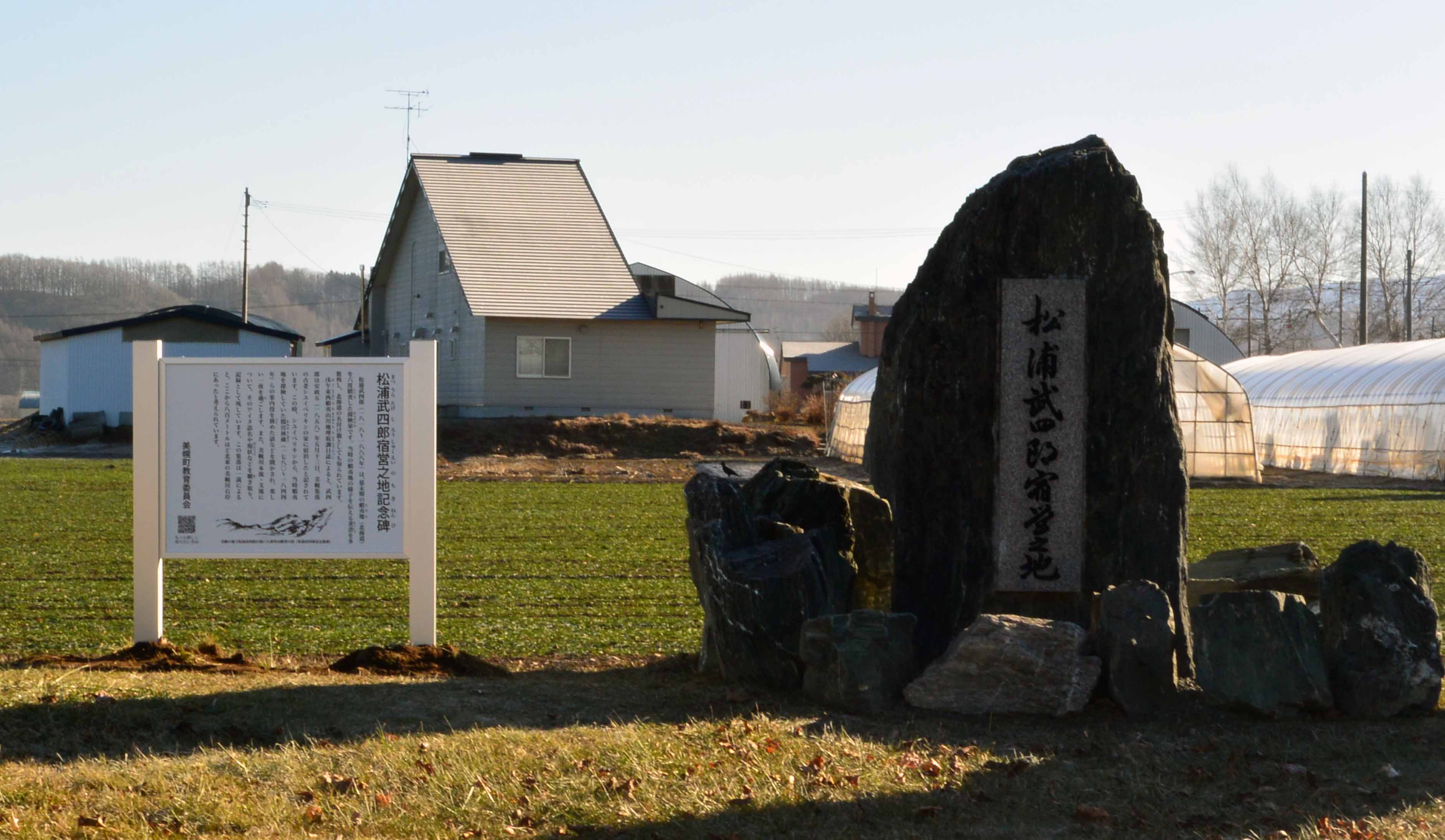
松浦武四郎宿営之地記念碑
松浦武四郎宿営之地記念碑
松浦武四郎(1818〜1888年)は、幕末期の蝦夷地(北海道)を六度踏査した探検家です。当時の蝦夷地の様子を伝える著書を多数残し、北海道の名付け親としても知られています。
戊午東西蝦夷山川地理取調日誌によると、武四郎は安政5(1858)年5月13日、美幌集落の古老シユイベリキンの家に宿泊したと記されています。この時、シユイベリキンから、当時蝦夷地を探検していた間宮林蔵(1780〜1844年)らの案内役を務めた話などを聞かされ、楽しい一夜を過ごします。また、美幌川本流・支流について、そのアイヌ語名や現状などを聴き取り、記録として残しています。この集落は一説によると、ここから800メートルほど北東の美幌川右岸にあったと考えられています。
Monument Commemorating the Stay of Takeshiro Matsuura
Takeshiro Matsuura (1818-1888) was a Japanese explorer who conducted six field surveys of Ezochi (now Hokkaido) during the late Edo period. He left many written records of the situation in Ezochi in those days. He is well known as “the godfather of Hokkaido”.
According to the survey diary Bogo Tozai Ezo Sansen Chiri Torishirabe Nisshi, Takeshiro stayed at the house of an Ainu ekasi (elder) named Siyuyberikin in Bihoro village on May 13, 1858. Takeshiro reported having a pleasant night listening to Siyuyberikin’s experiences as a guide to Rinzo Mamiya (1780-1844), who had explored Hokkaido. Regarding the Ainu names and details of the Bihoro River’s main stream and tributaries, Takeshiro interviewed Siyuyberikin and kept notes from the interview. One explanation says that the village was located on the right bank of the Bihoro River about 800 m northeast of here.
松浦武四郎が残した記録(1) [PDFファイル/564KB]
松浦武四郎が残した記録(2) [PDFファイル/479KB]
松浦武四郎が残した記録(3) [PDFファイル/488KB]
<外部リンク>
PDF形式のファイルをご覧いただく場合には、Adobe社が提供するAdobe Readerが必要です。
Adobe Readerをお持ちでない方は、バナーのリンク先からダウンロードしてください。(無料)
Adobe Readerをお持ちでない方は、バナーのリンク先からダウンロードしてください。(無料)
<外部リンク>
<外部リンク>
<外部リンク>